
Own Your Ground Initiative
Rapists are bullies.
They prey on who they think is weak.
They look for someone they perceive as smaller, quieter, easier to overpower — someone they believe they can take advantage of, someone they are counting on not to fight back.
Now imagine a beautiful world where that calculation fails — where every person has the self-defense tools to stop it from happening in the first place.
That is the world we are building. Own Your Ground Initiative funds self-defense courses for women who have survived rape and sexual assault — paying vetted schools directly, so the women who most need these skills are never priced out of them.

Founder · Survivor
fewer completed rapes after resistance training, in a randomized NEJM trial
women trained in that program prevented one completed rape
the risk of another assault faced by a woman who has already survived one — surviving makes her more of a target, not less
The revictimization reality
Survivors are the people most at risk of being attacked again
An assault does not lower a woman's risk of another — it raises it, sharply and measurably. A survivor is, in plain terms, more of a target than she has ever been. Across decades of research, prior victimization is one of the strongest known predictors of a future assault. That is why this fund is not only about healing what already happened — it is about protecting her from what could happen next.
the risk of a new victimization faced by women with a prior assault, in a prospective three-year study — prior victimization was called "one of the most robust predictors" of future assault.
of survivors were revictimized within two years of the first assault.
revictimization rate across a meta-analysis of 80 studies following 12,252 survivors.
That is the urgency of this fund: the women most likely to be attacked again are the very women we train. Funding a survivor's self-defense course is not charity after the fact — it is prevention aimed exactly where the risk is highest.
Sources: Jaffe et al. 2023, Women's Health Issues · Relyea & Ullman 2017, Violence Against Women · Walker et al. 2019, meta-analysis of 80 studies
The belief behind the fund
A bully's power depends on one thing: a target who can't resist. Training takes that away. It cannot undo what a survivor has lived through — but it can hand her back strength, skill, and the knowledge that her body is her own ground — and no one takes it without a fight.
Survivor-founded · Evidence-based · Just getting started
The gap we fill
Support ends too early
When a woman survives sexual violence, the system offers her a hotline, a hospital exam, maybe therapy, maybe a court advocate. All of it matters. Almost none of it gives her back the feeling that her body belongs to her — or the skills to protect it.
Quality self-defense training does both. It is also expensive, rarely covered by insurance or victim funds, and usually the last thing a survivor in crisis can pay for herself.
We remove the price tag — so a survivor can walk into training with nothing but her decision to be there.
No police report required. No public story required. Her healing, her terms, her pace.
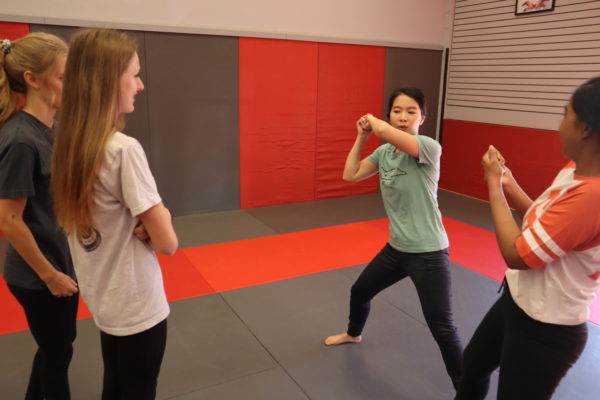
Why training
The numbers behind the mission
Sexual violence is common, repeat victimization is a documented pattern — and resistance training is one of the few interventions proven in a randomized trial to change the odds.
American women have been the victim of an attempted or completed rape in their lifetime.
Another American is sexually assaulted every 68 seconds, on average.
of students assaulted before college were victimized again during college — prior assault is one of the strongest predictors of another.
fewer completed rapes among women who completed resistance training in the landmark NEJM trial — and 63% fewer attempted rapes.
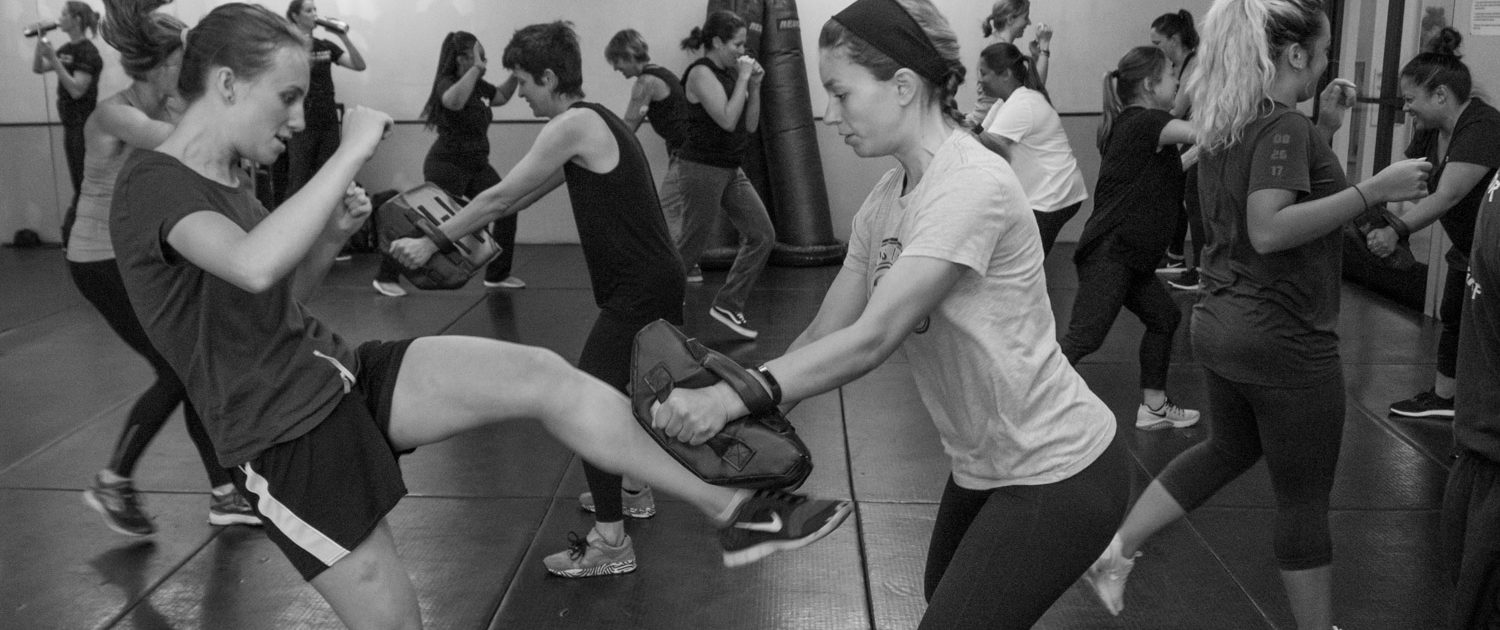
The study that changed the field
In a randomized controlled trial of 893 first-year university women, published in the New England Journal of Medicine in 2015, the Enhanced Assess, Acknowledge, Act (EAAA) resistance program cut the one-year risk of completed rape by 46% and attempted rape by 63% compared with standard campus resources.
Put plainly: enrolling 22 women in the program prevented one completed rape. It remains the strongest evidence in the field that this training works — and it is the model our scholarships are built on.
Sources: Senn et al., NEJM 2015 (PubMed) · Revictimization research (PMC) · RAINN statistics
The healing impact
The assault ends. The fear doesn't.
Rape doesn't end when the assault ends. For many survivors, it moves in — and it stays.
Complex PTSD. A nervous system stuck on high alert, long after the danger has passed. Fear that never fully switches off. It looks like scanning every room before she sits down. Crossing the street. Sleeping badly, or barely. Turning down the job, the trip, the date, the life she wanted — a life lived smaller, in perpetual anxiety, while the world assumes she should be "over it" by now.
That damage is not weakness, and it is not her fault. It is what trauma does. And it is exactly what the right kind of training speaks to — not with theory, but in the body, where the fear lives.
of survivors still met the criteria for PTSD a full year after the assault — and roughly three in four did at the one-month mark.
From a meta-analysis of prospective studies following survivors through the year after sexual assault.
What training gives back · 01
Symptoms that loosen their grip
In survivor-focused self-defense programs — including a VA pilot for women veterans with PTSD from military sexual trauma — participants showed significant reductions in PTSD hyperarousal, behavioral avoidance, and depression, still measurable six months after training ended.
What training gives back · 02
An end to self-blame
Empowerment-based resistance education measurably reduces victim-blaming attitudes — including the blame survivors turn on themselves. She learns, in her bones rather than as a slogan: it was never her fault, and it was never about her weakness.
What training gives back · 03
Confidence and autonomy, restored
Training builds self-efficacy — the felt, physical knowledge that she can read a room, set a boundary, and protect herself. Researchers link that growing self-efficacy to resilience and lower post-traumatic stress. It is the return of choice: where to go, what to do, how big a life to live.
Sources: PTSD in the year following sexual assault: a meta-analysis (PMC) · “Taking Charge” pilot — self-defense training for veterans with PTSD (Office of Justice Programs) · “I Felt Powerful and Confident” — resistance education's benefits for survivors (PMC)
The scholarship
How it works
Three steps between a survivor and the training mat — and we handle the money quietly, in the background, where it belongs.
She applies
A short, confidential application. Self-identification as a survivor is enough — no police report, no court records, no retelling her story to a committee.
We pay the school
The Initiative pays the vetted instructor or school directly. She never sees a bill, never fronts money she doesn't have, never has to ask anyone's permission.
She trains
A full evidence-based course — risk assessment, verbal resistance, and physical self-defense — at her pace, with trauma-informed instructors.
A full scholarship covers
- Complete course tuition at a vetted local school or program
- Training gear she needs to participate fully
- Refresher sessions, because skills fade and confidence shouldn't
- Childcare and transport support where they are the barrier
What she learns
Assess. Acknowledge. Act.
The EAAA model behind the NEJM results — the curriculum our funding is designed to deliver.
Assess.
Recognizing risk early — especially from acquaintances, who commit the large majority of assaults — and trusting what she notices.
Acknowledge.
Working through the emotional barriers that freeze survivors in the moment, and naming a situation for what it is, sooner.
Act.
Effective verbal resistance and physical self-defense, practiced hands-on until they are hers — not theory, muscle memory.
Founder
Meet the founder
Built by a survivor, for survivors
Own Your Ground Initiative was founded by Jennifer Gillen — a survivor who knows firsthand what it means to be chosen by someone who thought she couldn't fight back, and who knows what it takes to live with what comes after.
She started this fund for every woman still living in the aftermath: the fear that never quite switches off, the confidence that was taken, the life lived smaller than it was meant to be. Her answer is the one the research backs — put real training in her hands, and pay for it — so no survivor is priced out of taking her ground back.
"I know what it costs to live afraid. I want every survivor to know what it feels like to own her ground."
Jennifer Gillen is building the Initiative now — finalizing fiscal sponsorship, assembling the first funded cohort, and recruiting the instructors and partners who will make the first fifty scholarships real.
Get involved
Three ways in
Own Your Ground Initiative is being built right now. Here's where each person fits.
Survivors
Train with us
Scholarships open with our first funded cohort. If you are a survivor and cost is the only thing standing between you and self-defense training, this fund is being built for you.
Donors & partners
Fund a cohort
Our first goal is concrete: fund complete training for a first cohort of 50 survivors. Corporate and community partners can underwrite a full cohort or sponsor individual scholarships — with outcomes measured against the research, not just reported as stories.
Instructors & schools
Teach with us
We partner with established, trauma-informed self-defense instructors and schools. If your program follows an evidence-based curriculum, we want to send you students — and pay you fairly for teaching them.
Where we are right now
Own Your Ground Initiative is in formation. We are finalizing a fiscal sponsorship — the structure that lets an established nonprofit hold and administer funds for a new project — so that donations can be received properly and tax-deductibly from day one.
Until sponsorship is in place, we are not accepting donations, and we won't ask you for money we can't yet steward correctly. When the sponsorship is announced, scholarship applications and giving open at the same time.
Questions
Asked, answered
Do survivors need a police report or proof to apply?
No. A short confidential application and self-identification as a survivor are enough. Requiring reports would exclude the majority of survivors — most assaults are never reported — and our mission is to lower barriers, not add them.
Is this victim-blaming? Shouldn't we teach people not to assault?
Both things are true: prevention education matters, and perpetrators alone are responsible for assault. But survivors alive today deserve tools that work for them today — and the research shows this training measurably reduces repeat victimization. We fund it because it works, never because any survivor owes anyone a fight.
Is Own Your Ground Initiative a registered nonprofit yet?
Not yet — the Initiative is in formation and finalizing fiscal sponsorship, which allows donations to be received tax-deductibly through an established sponsoring nonprofit while we establish our own organization. We will announce the sponsorship and our sponsoring partner before accepting a single dollar.
Why self-defense, when so many survivor services already exist?
Because of the gap: crisis care, therapy, and legal advocacy all exist — underfunded, but they exist. Almost nobody pays for a survivor's self-defense training. It is the one intervention with randomized-trial evidence of preventing future assaults, and it is the piece survivors are most often left to fund alone.